

In today’s competitive manufacturing world, efficiency and precision are more important than ever. A well-organized production line not only ensures high-quality output but also enhances operational productivity. One of the most effective ways to achieve this is through industrial marking. Whether you’re working with intricate components or mass production, incorporating the right methods can significantly streamline your processes. This post will explore how using innovative techniques, including laser, ink, stamp marking, and engraving, can improve your production line and lead to superior quality products.
Table of Contents
What is Industrial Marking?
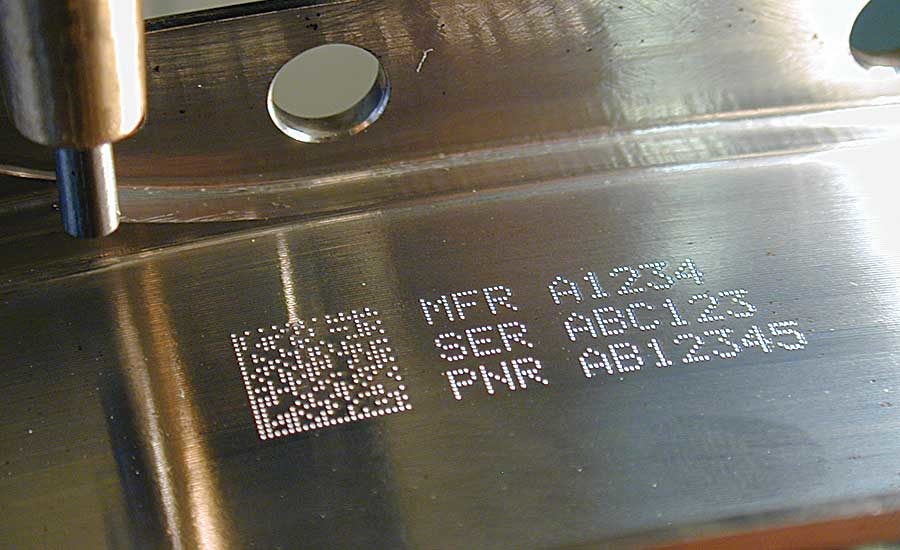
It refers to the process of adding permanent identifiers, such as serial numbers, barcodes, logos, and other essential information to parts and products during the manufacturing process. Part marking is crucial for tracking components, ensuring traceability, and maintaining quality control. The ability to mark parts accurately is essential across various industries like automotive, aerospace, electronics, and more.
There are several ways to mark parts, and each method offers distinct advantages depending on the material and requirements. Common part marking methods include laser, ink, stamp marking, and engraving—each tailored to different applications.
Why Industrial Marking is Vital for Your Production Line
Enhanced Traceability and Tracking
One of the core benefits of industrial marking is the ability to track and trace components throughout the entire production cycle. This is crucial for industries that require strict traceability, such as automotive or aerospace. By implementing industrial marking products, manufacturers can easily document the path of each part from raw material to finished product, improving quality control and ensuring compliance with industry regulations.
Improved Quality Control
With part marking methods in place, manufacturers can ensure each part is accurately identified and monitored for defects. The use of identification nameplates for labeling essential information on parts further enhances traceability. The ability to trace parts allows you to pinpoint any issues, reduce errors, and address problems before they affect the final product. This not only helps with quality assurance but also minimizes costly mistakes down the line.
Streamlined Production Processes
Automated industrial marking systems speed up the production process and reduce the chances of human error. Whether it’s laser marking for precision or ink for rapid application, these systems can help manufacturers meet high-volume demands without sacrificing quality or accuracy.
Cost Efficiency
While the initial investment in industrial marking may seem considerable, the long-term savings and benefits are undeniable. These systems reduce the need for labor-intensive manual labeling, improve accuracy, and lower the risk of costly mistakes, making it a cost-effective solution for modern production lines.
Common Part Marking Methods
The choice of method depends on various factors, including the type of material, speed requirements, and the level of detail needed. Here are the most widely used methods in industrial settings:
1. Laser Marking
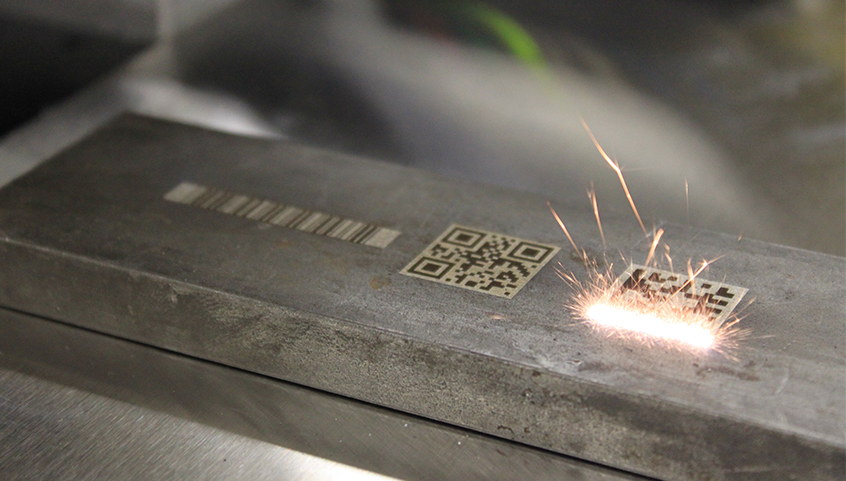
It uses a focused laser beam to create precise, high-contrast markings on a variety of materials, including metals, plastics, and ceramics. This non-contact process results in permanent, durable markings that can withstand harsh environments.
Advantages:
- Permanent and durable
- High precision, ideal for intricate designs
- Works on a wide range of materials, including metals, plastics, and composites
- Ideal for high-contrast, easy-to-read marks
Applications:
It is commonly used in industries like aerospace, electronics, and automotive, where part identification and traceability are critical.
2. Ink Marking
Ink marking, also known as inkjet marking, involves using ink to print marks on a part’s surface. This method is fast, cost-effective, and suitable for non-metal materials like plastic, cardboard, and some metals.
Advantages:
- Quick application
- Flexible and suitable for a variety of materials
- Ideal for marking high volumes of products, such as barcodes, batch numbers, and expiration dates
Applications:
It is widely used for labeling products in industries such as food packaging, textiles, and electronics.
3. Stamp Marking
It uses a physical die to imprint information on a part’s surface. This method is typically used for metal parts and offers a high level of durability. It’s a popular choice for industries that require robust markings that can withstand physical wear and tear.
Advantages:
- High durability and permanence
- Can be applied to a variety of materials, particularly metals
- Ideal for creating clear, legible marks under harsh conditions
Applications:
It is often used in industries like automotive manufacturing, where parts need to be permanently marked for identification and traceability.
4. Engraving
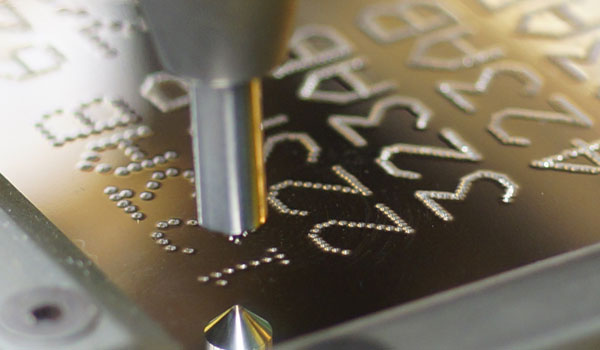
Engraving involves cutting or carving into a material to create permanent marks. This method is often used for high-value products or for parts that will be exposed to extreme conditions. Engraving can be done with various tools, including lasers and rotary machines.
Advantages:
- Extremely durable, ideal for harsh environments
- Precise and legible markings, even on small parts
- Permanent and resistant to wear and fading
Applications:
Engraving is commonly used for tools, medical devices, luxury items, and identification plates that require a high level of precision and long-term readability.
Choosing the Right Industrial Marking Products for Your Production Line
When selecting industrial marking products, it’s essential to choose the right method that suits your specific needs. Factors like material type, production speed, and the nature of the markings all play a role in determining the best solution for your production line.
Some important considerations include:
- Material Compatibility: Make sure the marking method you choose is compatible with the material you’re working with. For example, laser works well on metals and plastics, while ink may be better suited for non-porous materials.
- Production Speed: If you need to mark high volumes of parts quickly, consider ink or stamp marking. These methods are known for their speed and efficiency.
- Durability: If the parts will be exposed to harsh conditions, such as extreme temperatures, chemicals, or mechanical wear, engraving and laser marking are both excellent options for ensuring long-lasting marks.
Commonly Asked Questions
What are the benefits of laser marking over ink marking?
It offers more permanent, durable marks compared to ink, which is ideal for temporary or less demanding applications. These are resistant to fading and wear, making them suitable for harsh environments.
Can I use stamp marking on plastic parts?
It is typically best suited for metals and harder materials. For plastic parts, ink or laser marking would be more effective.
How does engraving differ from other marking methods?
Engraving creates deeper, more permanent marks by physically carving into the material, making it highly durable. It’s often used for parts that require long-lasting, legible markings, especially in challenging environments.
Is ink marking cost-effective for high-volume production?
Yes, it is one of the most cost-effective methods for high-volume production. It’s fast, versatile, and requires minimal maintenance, making it ideal for marking large quantities of parts or products.
What industries benefit most from industrial marking?
Industries like automotive, aerospace, electronics, and food packaging benefit greatly from marking. These sectors require accurate part identification, traceability, and high-quality standards.
Conclusion
Incorporating industrial marking into your production line offers numerous advantages, including improved traceability, higher product quality, and faster manufacturing times. Whether you choose laser, ink, stamp marking, or engraving, each part marking method has its own unique set of benefits. Additionally, Industrial Nameplates can provide a durable, clear way to label products with essential details such as part numbers, company logos, and safety information. By selecting the right method and marking products for your operations, you can improve efficiency, reduce errors, and achieve superior product consistency. Stay ahead of the competition and revolutionize your production line with innovative solutions today!
14 thoughts on “Transform Your Production Line with Innovative Industrial Marking”
Comments are closed.